
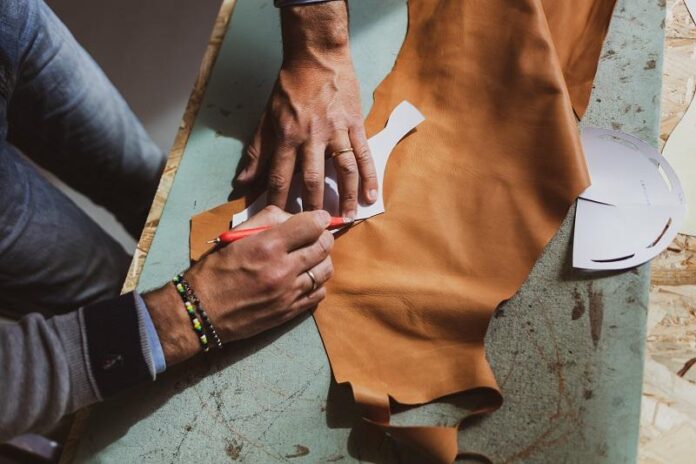
The difference between a handmade wallet that looks crafted and one that looks homemade is rarely the hide. Same leather, same thread, sometimes the same design. The gap lives in process details that production leather workers treat as standard and most beginners skip entirely.
Precision marking is where most amateur work loses control first. A scratch awl scribes a stitching line directly into the surface before the needle starts, creating a shallow groove that guides thread and holds tension more uniformly than a drawn line can across a full seam.
Stitch Spacing Decides How the Piece Reads
Uneven stitch spacing is the clearest signal of an inexperienced hand. It is not about saddle stitching versus machine stitching. It is about whether the holes fall at regular intervals and whether the thread lies flat between them.
A stitching chisel or pricking iron, used at consistent pressure and angle, sets the spacing before the needle starts. Mark, punch, then stitch. That sequence produces the line that makes a piece look finished rather than assembled.
Edge Work Is What Anyone Holding the Piece Notices First
Raw leather edges fray, discolor, and compress unevenly over time. Beveled edges finished with gum tragacanth or tokonole look like the piece was completed rather than trimmed and left.
The process:
1. Bevel the edge at 45 degrees with a beveling tool
2. Burnish with a wood slicker, applying light pressure in long strokes
3. Apply an edge dressing compound and burnish again while slightly damp
4. Final burnish with a canvas cloth to compact the surface fibers
Five minutes per piece. Visible improvement at arm’s length.
Skiving Changes How Folds and Joints Sit
Skiving is the process of thinning leather where two pieces join or where the material needs to fold without raising a ridge. Skip it, and every fold sits higher than it should, creating a lumpy profile that reveals the construction rather than concealing it.
A skiving knife removes material at a consistent angle. The join disappears. The fold lies flat.
Consistent Hole Size Matters More Than Hole Count
Using the same punch throughout a piece sounds obvious. In practice, it means the same tool at the same angle with the same force across a long project, which is easy to lose track of. Holes that vary in size or depth create uneven thread tension along the stitch line, and that variation shows.
Punch on a firm, solid surface. Keep the punch vertical on every strike, not tilted.
Pattern Alignment Signals Production Quality
On patterned leather, matched seam joins take additional time and skill. That investment shows. A misaligned pattern at a seam tells anyone looking that it was cut to dimension without regard for how the faces would read together.
Geometric prints and stripes make this visible. Getting the pattern to continue across a seam requires only planning the cut before making it, and the same planning applies to hardware, where a clean grommet punch hole keeps the finished piece looking deliberate.
FAQS
What is the most common mistake beginners make with leather?
Skipping edge finishing. Most beginners omit it because it seems cosmetic, but edge work is the first detail anyone holding the piece notices.
Does handmade leather require expensive tools to look professional?
A beveling tool, a stitching chisel, and a burnishing slicker cover most of the visible quality differences and cost less than a single sheet of quality leather.
Can you correct uneven stitching after the piece is finished?
Not meaningfully. Pulling and re-stitching damages the hole channels and usually produces a worse result, so prevention through marked guidelines is the only fix.